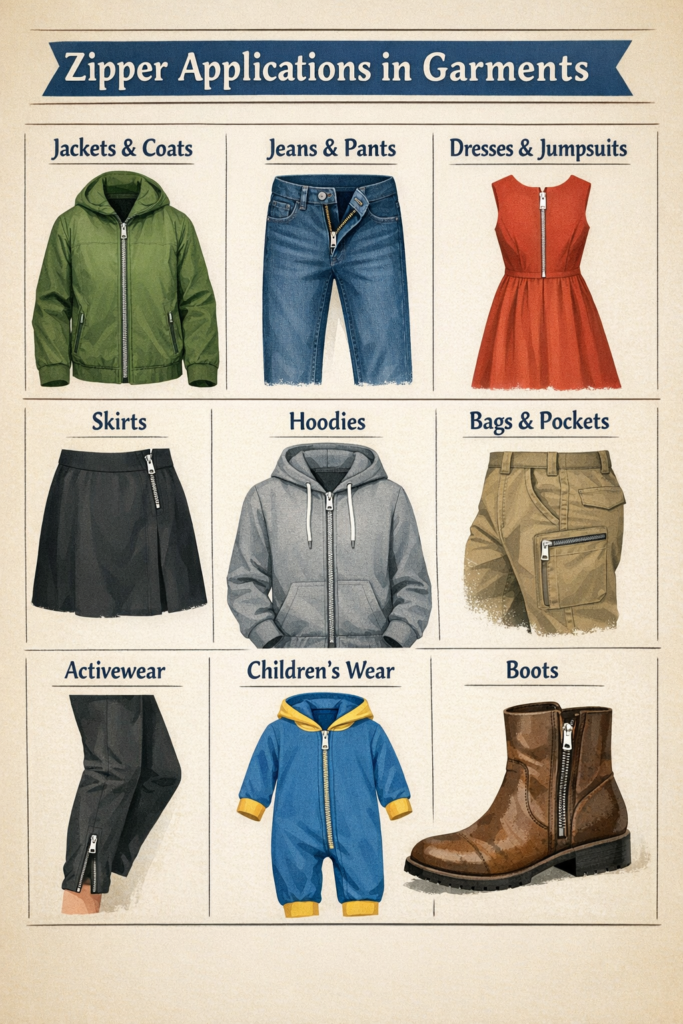
🔒 Common Zipper Types in Garment Construction: Closed-End vs Open-End Zippers
Zippers are one of the most essential fastening systems in apparel manufacturing. Among all zipper variations, closed-end zippers and open-end zippers are the two most commonly used types in garment production.
Understanding their structure, application, and insertion direction is critical for designers, product developers, and manufacturers.
🔹 1️⃣ Closed-End Zippers
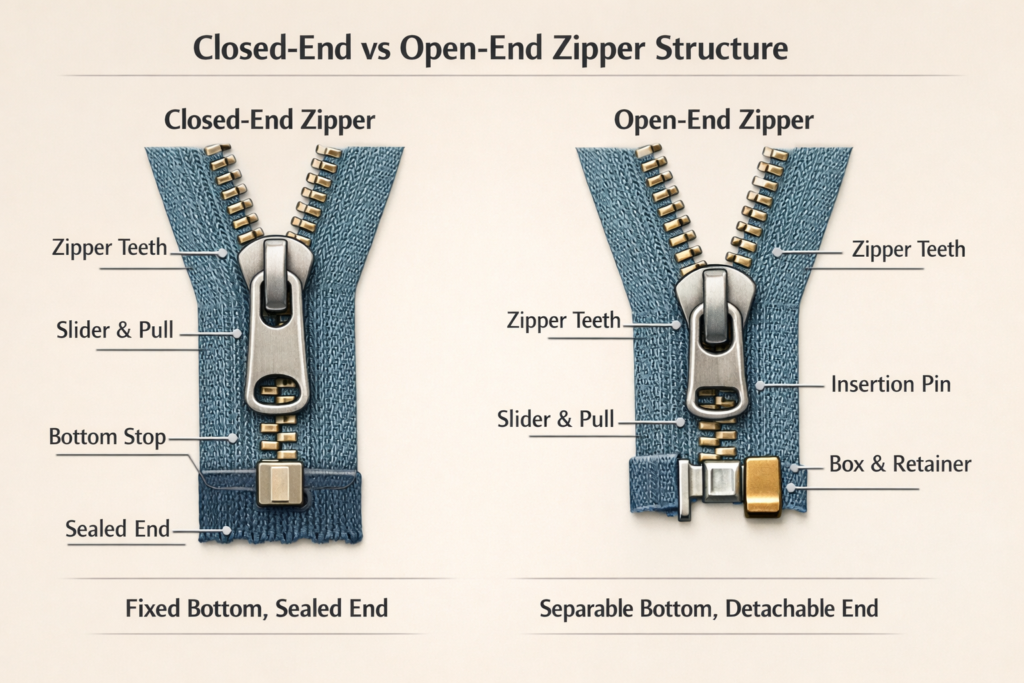
A closed-end zipper has a bottom stop that permanently joins both zipper tapes, preventing them from separating completely.
✔ Common Applications:
- Skirts
- Jeans fly
- Dresses with back openings
- Tops with open necklines
- Pockets
Closed-end zippers are ideal when:
- The opening does not require full separation
- Structural support at the base is necessary
- Clean seam integration is preferred
Because the bottom stop prevents full opening, these zippers provide stability and are widely used in fitted garments.
🔸 2️⃣ Open-End Zippers
An open-end zipper allows both sides to fully separate. The bottom contains a pin-and-box mechanism that enables detachment.
✔ Common Applications:
- Jacket front plackets
- Coat openings
- Hood attachments
- Removable sleeves
- Convertible trouser legs
Open-end zippers increase garment functionality and versatility.
For example:
- Jackets that convert into vests by unzipping sleeves
- Detachable hoods for weather adaptability
- Adjustable pant hems
🔹 Functional Differences
| Feature | Closed-End Zipper | Open-End Zipper |
|---|---|---|
| Bottom Separation | No | Yes |
| Common Use | Skirts, jeans | Jackets, coats |
| Structural Stability | High | Moderate |
| Convertible Design | Not suitable | Ideal |
🔸 Important: Zipper Insertion Direction
In the United States, zippers are typically inserted:
➡ From left to right
This standard applies to:
- Women’s clothing
- Men’s clothing
- Children’s clothing
If a zipper closes from right to left, it may indicate European production. While functional, it can feel awkward for users accustomed to U.S. standards.
📌 When preparing a tech pack, always specify:
- Zipper insertion direction
- Slider orientation
- Front placket alignment
🔹 When Open-End Zippers Are Not Recommended
Open-end zippers are not ideal for:
- Back-opening tops
- Dresses with center-back closures
- Tight-fitting garments requiring self-closure
Because aligning the pin-and-box mechanism requires precision, it may be difficult for:
- Young children
- Wearers zipping from behind
🔸 Convertible Garment Example
Modern functional fashion often uses open-end zippers to create:
- Zip-off sleeves
- Convertible jackets-to-vests
- Modular outerwear
This enhances garment value and adaptability.
🔹 Technical Specification Checklist
When specifying zipper type, include:
- Zipper type (closed-end/open-end)
- Length (cm/inch)
- Teeth type (metal, nylon, molded plastic)
- Tape color
- Slider type
- Insertion direction (Left-to-Right for U.S.)
- Reinforcement requirements